A Rational Proposal for the Future of NC12, the Main Highway on the Outer Banks
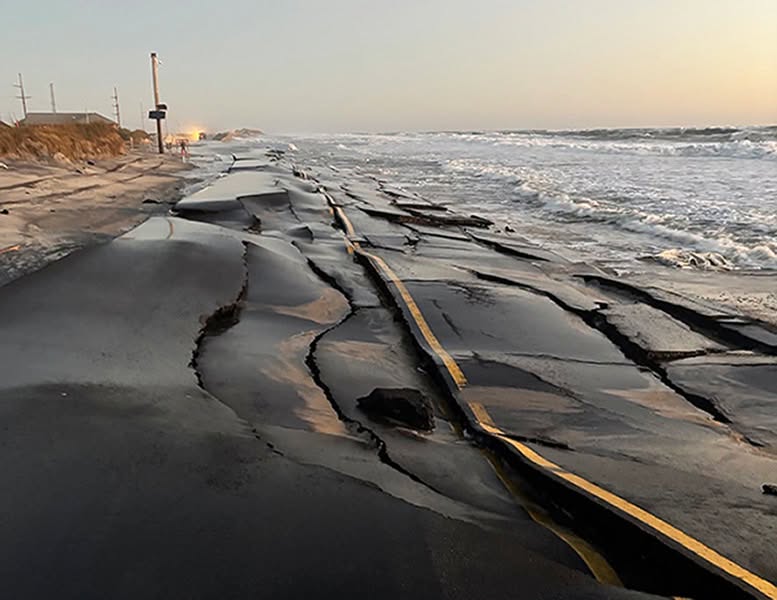
As the main route traversing the Outer Banks has once again been destroyed by tidal action, isn't it time to stop fighting nature and take steps to create a roadway that respects the fact that this thoroughfare is on a barrier island?
 Back in 1997, I saw a Nova special on PBS called “Super Bridge.” It was about a project to build a replacement bridge for a critical route spanning the Mississippi River between Missouri and Illinois. It was fascinating to me, which I guess makes me into something of an engineering nerd, but whatever…
The special highlighted the advanced engineering of the bridge, which was designed by a company based in Florida known as the Figg Engineering Group. If an engineering company can have groupies, then I’ve become an unabashed Figg groupie.
You’ve seen many of their projects probably without realizing it. Locally, they designed and participated in building the beautiful Jordan Bridge over the Elizabeth River, as well as the Lesner Bridge in Virginia Beach. And if you’ve driven I-295 outside of Richmond, you’ve likely crossed the eye-popping Varina-Enon Bridge. Their slogan is “Creating Bridges as Art.”
Other notable bridges they’ve designed include the Sunshine Skyway Bridge from Tampa to St. Petersburg, and the Leonard P. Zakim Bridge in Boston – the last piece of the “Big Dig” project. There are dozens more.
But perhaps their most noteworthy achievement was the rebuilding of the I-35 bridge in Minneapolis after the tragic collapse in 2007 of the old bridge due to structural failure. 13 people lost their lives, and another 145 were injured.
Working with their construction partners, Figg designed, engineered, and built one of the most advanced bridges in the country, and opened it a mere 13 months after the collapse.
Imagine that. We can barely get our potholes fixed in that timeframe.
Figg has perfected two specific construction methods that were revolutionary. The first is the cable-stayed bridge, which was actually first used in post WW2 Europe as a fast, cost-effective way to replace many critical spans that had been destroyed in the war. The Varina-Enon Bridge is a beautiful example of this.
This methodology was first brought to America, and subsequently refined by Eugene Figg, the company’s namesake, in the early 60s.
The other innovation, and the more important in many ways, was the development and refinement of the so-called “precast segmental concrete construction” method. In this system, sections of the bridge are precast on the ground, then assembled together in the air like a string of pearls, using pretensioned steel cable. This is how the Jordan Bridge and Lesner Bridge were built.
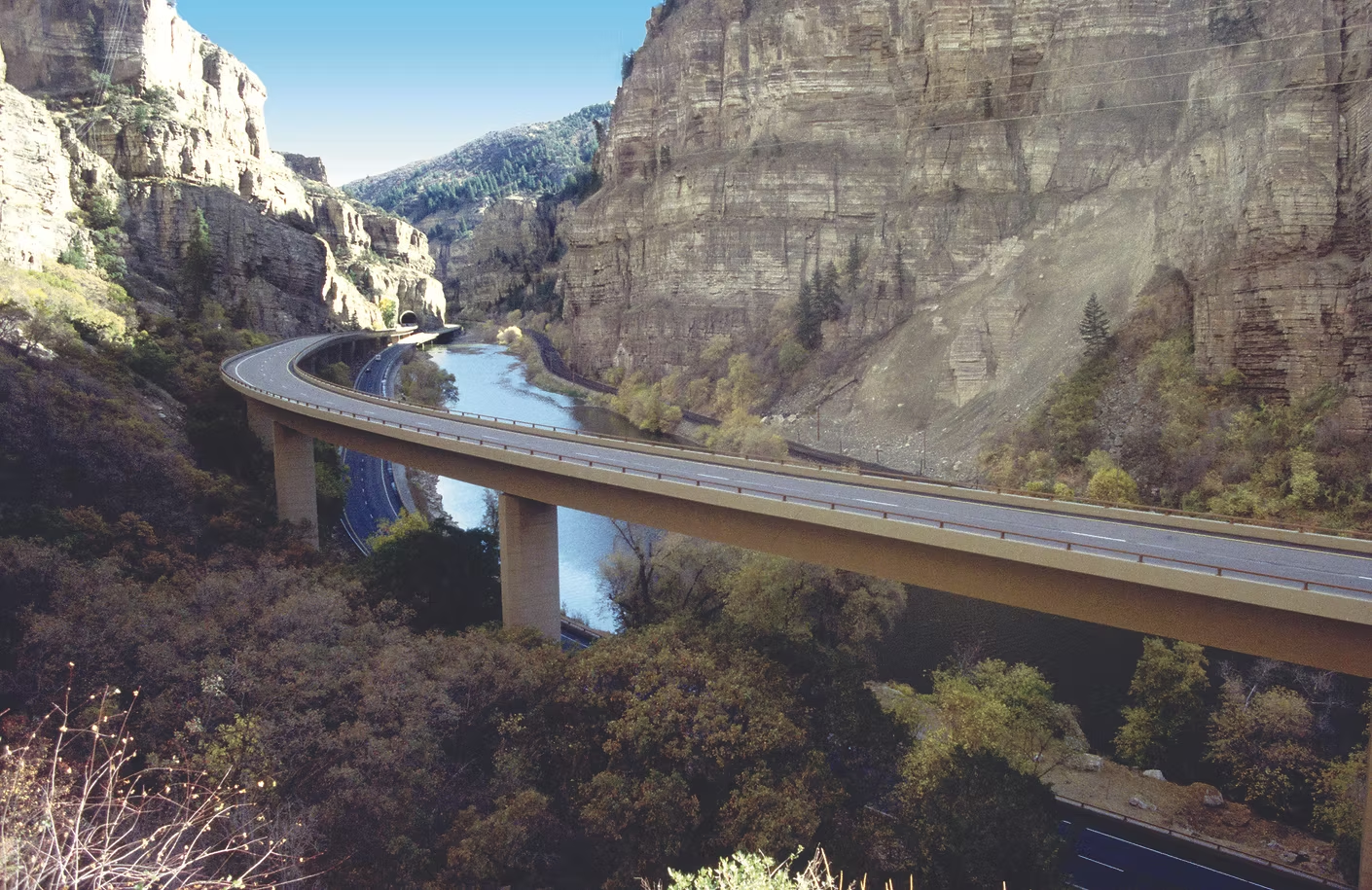 Suppose that instead of going into these wetlands and other environmentally sensitive areas and trying to build up a conventional roadbed, we were to use the precast segment method to build a viaduct over the sensitive areas?
The only impact would come from sinking the support pilings, which can be done (mostly) from the viaduct surface itself as the roadway grows segment by segment. By giving the viaduct just a few feet of elevation, it would be unaffected by tidal changes, as well as allowing for the passage of wildlife underneath.
As a bonus, these segments have an enclosed, trapezoidally shaped support area underneath the road surface which could be used to catch and pipe stormwater runoff from the road, as well as carrying major utility services like power and water lines.
Yes – such a construction method would surely cost more per mile than conventional roadway in suitable non-sensitive areas. But when you consider all the advantages (mitigation of most environmental impact – particularly zero loss of wetlands, easy routing of utilities, creation of a much more secure evacuation route from the Outer Banks, virtually unaffected by flooding), how would using this method to span the areas of NC12 that cause the most heartburn NOT be the most logical way to go?
(Note: Much of this copy was lifted from an article I previously wrote about a very similar topic.)